Looking for electric hot water systems?
Among the various new hot water systems available on the market, the electric hot water system is one of the most common models found in Australian homes.
Electric hot water systems are generally affordable and quite versatile as they can be easily installed in various locations, making them a hot product for Perth homes. The advantage of an electric water heater is that it can be installed in any home – regardless of your heating system – provided you choose the right model. But that’s not its only advantage.
An electric hot water system provides you with daily comfort thanks to the hot water it produces, while being efficient. Some models even allow you to make real energy savings thanks to the technologies and features they are equipped with.
We only install, repair or supply the best brands in Australia!
With a our electric hot water system service, you can easily:
- Find the best electric hot water unit for your home
- Save money with an affordable electric system
- Get your electric unit installed in a safe and compliant way
- Receive a FREE competitive quote for Perth metro
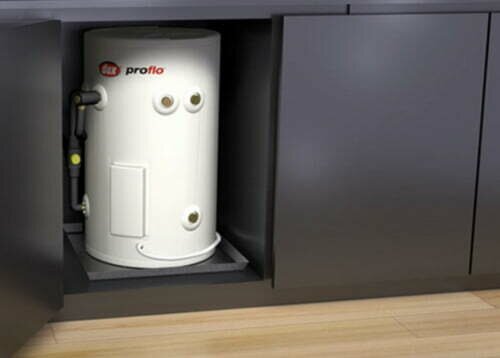



Buying an electric water heating system gives you access to a simple unit for producing hot water. Different tank capacities are available (from 50 to 300 litres), and installation can be done quickly and cheaply. On the other hand, electric hot water systems also have some disadvantages, such as regular maintenance and relatively high energy consumption.
Do you really know everything about this type of hot water system? We prepared the following guide for you.
Types of electric hot water systems available in perth
There are 2 main types of electric water heaters, within which there are different models available. The difference is often made between instantaneous hot water systems and storage electric hot water systems, the latter also being called a storage tank.
Instantaneous Hot water system (also called continuous flow systems)
An instantaneous hot water system, heats water directly, on-demand through a small electrical unit. It therefore only consumes energy when you need it.
Storage hot water systems
These systems come with a hot water storage tank that stores and heats the running water with the help of an electric resistance that switches off when the hot water is at the right temperature (around 50 to 60°C).
Within these 2 main families, we can find different product variations, and storage hot water systems with specific characteristics:
- Small-capacity electric units (mini water heaters): these very small models have the advantage of being able to be installed in cramped spaces, or even in cupboards, because of their small capacity.
- Vertical units: the most common model for producing hot water in Aussie homes, which, as its name suggests, is installed in a vertical orientation. They differ from the old horizontal models in that the choice between the two generally depends on the layout of the room and the area in which the unit is installed.
- Some models differ according to the nature of their resistance. These units are in direct contact with the domestic water and are sometimes fitted with a magnesium anode to protect it against corrosion and limescale.
- Other tank models are not in direct contact with the water, as it is surrounded by an enamelled anti-corrosion steel sleeve. In this way, it also avoids limescale and scale (scaling being a recurrent problem).
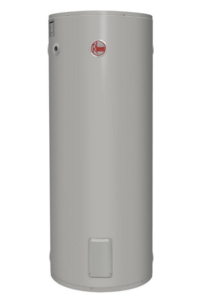
To choose the right model, first ask yourself a few questions:
- What are the living habits of the members of my household: shower or bath? Are people taking showers more in the morning, evening or is it equally divided? Dishwasher or hand washing? The amount of hot water needed will not be the same from a household to another. The more baths you take, the larger the water heating system you will need.
- How many people are in your household? The capacity (in litres) of a water heater will be quite different between a single person and a family with 4 children for example. The average water consumption per adult is 50 to 80 litres per day, for a reasonable use of hot water.
- How many water outlets do you have in your home? A bath, a shower, 2 sinks, a single sink? The more drawing points you have, the greater the capacity of your heating unit should be. If your water heating capacity is too low, you will feel some discomfort.
- Do you prefer a water heater that you don’t have to manage, or do you want to be able to intervene easily to adapt your hot water consumption? If you don’t want to take care of your water heater, mot models will suit you because all our water heaters operate autonomously on the daily. If, on the other hand, you want to adapt your consumption to your schedule and control your energy costs, you should probably switch to a connected heater (which can be controlled remotely from an application) and/or equipped with intelligent hot water production (automatic adaptation of the appliance to your hot water needs according to your previous consumption).
- Do you live in a region with hard water? If so, choose a tank model that is not in direct contact with the water and is therefore protected from scaling.
- Is the water in your home hard or soft? If it is soft, there is a greater risk that the tank of your water heater will be exposed to corrosion. In this case, look for a well-protected model.
What is an electric water heater?
An electric hot water system is the unit used to provide hot water in your home (for taking a shower or washing your clothes, for example). This equipment consists of 2 main elements: an electric heating system with a resistance and a regulation thermostat. A tank is sometimes used to store the water as opposed to on-demand continuous flow units.
How does an electric hot water system works?
Here are the different stages of hot water production that take place:
- The water arrives in the tank of the water heater (supplied by the water network to which your house is connected)
- It is stored in the tank and then heated by the electric resistance, until the regulation thermostat indicates that the temperature you want is reached
- When you use hot water in your home, the water heater is refilled with cold water, which will be reheated when you use it again
- Some models are called instantaneous hot water systems and provide hot water on-demand without the use of a storage tank

Controlling the water heating
To control the heating and water temperature in the heater, a thermostat detects whether the water temperature in the tank is below the set temperature on the thermostat.
If this is the case, the system closes the electrical circuit of the water heater so that the heater can start doing its job. It then heats the water until the thermostat detects that the desired temperature has been reached: the electrical circuit is opened and the resistor is switched off.
Once the hot water has been used (and replaced by cold water), or has had time to cool down due to heat loss, the resistance is automatically switched on again thanks to the thermostat which closes the electrical circuit again. The water is thus continuously heated.
What size tank should you choose for your electric water heater?
The small capacity models have a capacity of 10L to 30L, while some electric water heaters can go from 50L to 100L. It is generally considered that a minimum volume of about 65L is required to adequately meet the hot water needs of a 3 person household. For a family of four, this volume should be 80L at the very least, and 200L for optimum comfort.
Above a 100 litres, small capacity or flat unit models should be avoided and the classic vertical appliances are more suitable. Vertical models are the most used type of units in Perth Western Australia!
We have a guide to help you decide which tank size to pick!
Can you save money with an electric water heater?
The problem with electric hot water heaters is that you generally have to choose between performance and savings.
Indeed, the Australian specificity resides in a system of pricing known as “off-peak hours” which is relatively advantageous for appliances producing domestic hot water during the night, waiting to be used during the day. But despite this advantage in terms of tariffs, the efficiency* of the water heater itself is significantly lower than that of an electric instantaneous or even gas hot water systems.
*The higher the efficiency of an appliance, the more efficient it provides and the less energy it consumes.
In this respect, thermodynamic water heaters or solar hot water systems are an ideal solution, which we strongly recommend. Connected to an air-to-air heat pump, a thermodynamic water heater uses the heat from the surrounding atmosphere to transfer the heat to the water in its storage tank.
It also works with an electrical supply, but a thermodynamic water heater installation (heat pumps) can offer up to 70% savings on energy bills compared to an exclusively electric water heater (electric tank or instantaneous model). Solar hot water systems use free energy from the sun and are a great option if you can afford a solar system and do not have an existing hot water system already.
The advantages and disadvantages of electric hot water heaters
Are you wondering whether you should install an electric water heater in your home? Here is a summary of the strengths and weaknesses of this type of equipment so that you can make an informed decision:
Pros of electric models
Cons of electric models
Frequently asked questions
Still have questions?
If you cannot find an answer to your question in our FAQ, you can always contact us
and we will be with you shortly.
Your hot water systems experts. We only repair, supply and install the best brands in Australia and can send a contractor on-site anywhere in the Perth metro.
Address :
78 Fitzroy Rd,
Rivervale,
Western Australia – 6103
Australia.
Tel :